


Pilates Reformer Guide: Myths, Options and Safety
Introduction
This article busts common myths about the pilates reformer and compares the main options for people deciding whether to try, buy, or recommend one.
For a real-world class format, see pilates reformer sessions offered in Malaysia.
What is a Pilates Reformer?
Design and function
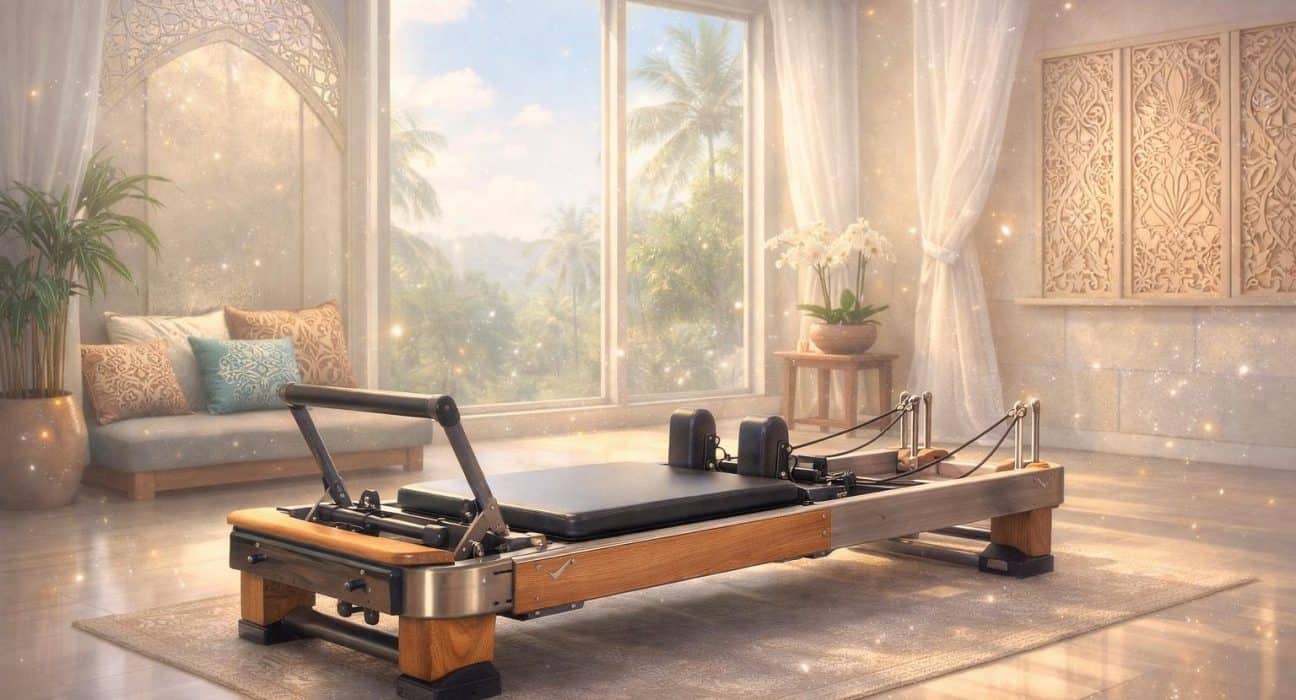
The pilates reformer is a bed-like frame with a sliding carriage, springs for resistance, a footbar and straps; it allows controlled, spring-loaded movement that targets strength, alignment and mobility. Instructors use it to scale exercises across skill levels, offering both assistance and resistance that mat work cannot supply in the same way.
Common variations
Reformers come as studio-grade machines, compact home models, and portable versions with lighter frames. Differences lie in build quality, rail length, carriage smoothness and spring configuration; these affect exercise range, durability and price.
Myth-busting: What people often get wrong about the reformer
Myth — Only dancers or athletes benefit
While dancers and athletes commonly use the pilates reformer, its benefits suit a wide range of populations: older adults, people rehabbing injury, and those seeking core stability or posture improvement. Exercises can be adapted for low-impact rehabilitation or advanced conditioning alike.
Myth — The reformer is dangerous and causes injuries
The reformer can be safe when instruction is competent and exercises are prescribed appropriately. Risks increase with poor technique, overloading springs incorrectly, or unsupervised progression. Certified instructors and proper supervision markedly reduce injury risk.
Myth — It’s just a harder version of mat pilates
Although mat pilates and the reformer share underlying principles, the reformer adds variable resistance, assisted range of motion and a stable platform that changes movement dynamics. It can make some exercises easier and others more challenging, rather than merely harder.
Myth — One must already be flexible to use it
Flexibility is not a prerequisite; the reformer often helps improve mobility through controlled, guided movement. Exercises can be performed within a comfortable range and progressed gradually, so limited flexibility is typically not a barrier.
Myth — It is too expensive or impractical for most people
High-end studio reformers are costly, but affordable home options and community studio classes provide accessible paths. Renting studio classes or joining small-group sessions reduces upfront cost while delivering supervised training. For a program overview, the https://la-pilatesstudio.com/machine-group-class/ page is a useful reference.
Comparing options: Where the reformer fits with other choices
Reformer versus mat pilates
Mat pilates is portable and low-cost, focusing on bodyweight control and breath. The reformer offers resistance variability and assisted movements, which can accelerate strength and mobility gains. Many programmes combine both for balanced results.
Studio reformer versus home reformer
Studio reformers provide longer rails, heavier-duty springs and smoother carriages; they suit frequent, intensive use. Home reformers prioritise compactness and price. Buyers should match machine specifications to intended usage frequency and available space.
Reformer versus other apparatus (Cadillac, chair)
Other apparatus target specific goals: the Cadillac offers a wide range of suspension-based exercises, while the Wunda Chair challenges balance and pressing strength. The reformer is the most versatile for general conditioning, but apparatus choice depends on programme goals.
How to choose the right pilates reformer
Budget and build quality
Decisions should weigh intended use against materials and warranty. For occasional home use, a mid-range frame may suffice; for daily studio classes, investing in a robust, commercial-grade reformer pays off in longevity and performance.
Space, storage and features
Measure space and consider foldable or portable models if storage is limited. Check carriage length, spring range and accessory compatibility (e.g., long straps, box, tower) to ensure the reformer supports desired exercises.
Instruction and certification
Access to qualified instructors matters more than brand. Certification from recognised bodies ensures safer progressions and better programming. When buying for home use, plan a few sessions with a certified trainer to establish technique and a personalised programme.
Practical tips, safety and what the evidence says
Starting safely
Begin with an introductory session, disclose medical history to the instructor, and start on lower spring tensions. Progress should be guided by pain-free range and movement quality rather than speed or load.
What the evidence says
Research supports pilates — including reformer-based programmes — for improving core stability, posture and functional outcomes in various populations, and it is often recommended as a low-impact option for rehabilitation and chronic pain management (see resources from Harvard Health and professional pilates organisations for summaries and guidance). For a broader context on how movement traditions evolve over time, see public holidays and cultural routines.
For further reading on benefits and safe practice, consult reputable resources such as Harvard Health Publishing (Harvard Health), the NHS overview on pilates (NHS), and professional industry guidance from the Pilates Method Alliance (PMA) or manufacturer information for machine specifications (Balanced Body).

